Roofers size a tear-off differently than almost anyone else who rents a dumpster, and for good reason: shingles and tile are heavy for how little room they take up, which means volume — the number most people think about first — is rarely the number that matters most. If you’re planning a re-roof anywhere in the Pasadena, Altadena, or greater San Gabriel Valley area, here’s how to size the container correctly the first time.
How Roofers Measure a Job: Squares, Not Square Feet
Roofing is measured in squares — one square equals 100 square feet of roof surface. A typical single-story home runs somewhere between 15 and 30 squares depending on footprint and roof complexity, while larger or multi-story homes can run higher. When you call for a quote, having the square count from your roofer or contractor on hand gets you a faster, more accurate size recommendation than describing the house alone.
Why Weight Matters More Than Volume for Shingles
A single square of standard asphalt shingles weighs roughly 200 to 400 pounds depending on the shingle type, which means a modest-sized roof can generate a genuinely heavy load without ever coming close to filling a container by volume. This is the same lesson that trips up concrete and drywall jobs: a dumpster that looks half-empty can still be at its weight limit. Sizing a roofing job purely by looking at the container and guessing how much room is left is the most common way a tear-off ends up costing more than expected — give us the square count and layer count instead, and we’ll size it on weight, not on how big the box looks.
Single-Layer vs. Multi-Layer Tear-Offs
A single layer of shingles being removed is one thing; a roof with two or three layers stacked on top of each other from past re-roofs without a full tear-off is a meaningfully heavier job for the same square footage. If your roofer has confirmed multiple layers are coming off, mention that when you call — it’s often the difference between a 20-yard container being enough and needing to step up in size or plan for a swap.
Sizing Guide: 20-Yard Is the Default, Here’s When to Size Up
For most single-story homes with a single layer of asphalt shingles and a roof up to around 50 squares, a 20-yard dumpster is the standard call and covers the large majority of tear-offs we quote. Smaller roofs, additions, or partial re-roofs sometimes fit a 15-yard dumpster instead. Larger homes, multi-layer tear-offs, or jobs combining roofing with other renovation debris often need to step up to a 30-yard dumpster to stay within a reasonable weight allowance. Our roofing dumpster rental page covers sizing by job type in more detail, and our general sizing guide is useful if the roofing job is part of a larger project.
Tile Roofs: A San Gabriel Valley Complication
Spanish and Mediterranean-style homes are common throughout Pasadena, San Marino, South Pasadena, and much of the San Gabriel Valley, and a lot of them carry clay or concrete tile roofs rather than asphalt shingles. Tile is dramatically heavier per square than shingle — often several times the weight — which changes the sizing math substantially. A tile tear-off that would look modest by square count can hit a container’s weight allowance well before a comparable shingle job would, and depending on total roof size, a tile job may need a larger container, a lower fill target, or a dedicated heavy-debris approach similar to what we use for concrete. If your home has a tile roof, say so when you call — it changes the recommendation enough that we’d rather ask up front than requote after delivery. Our concrete & heavy debris service covers the same weight-first sizing logic that applies to a heavy tile tear-off.
Placement on Tear-Off Day
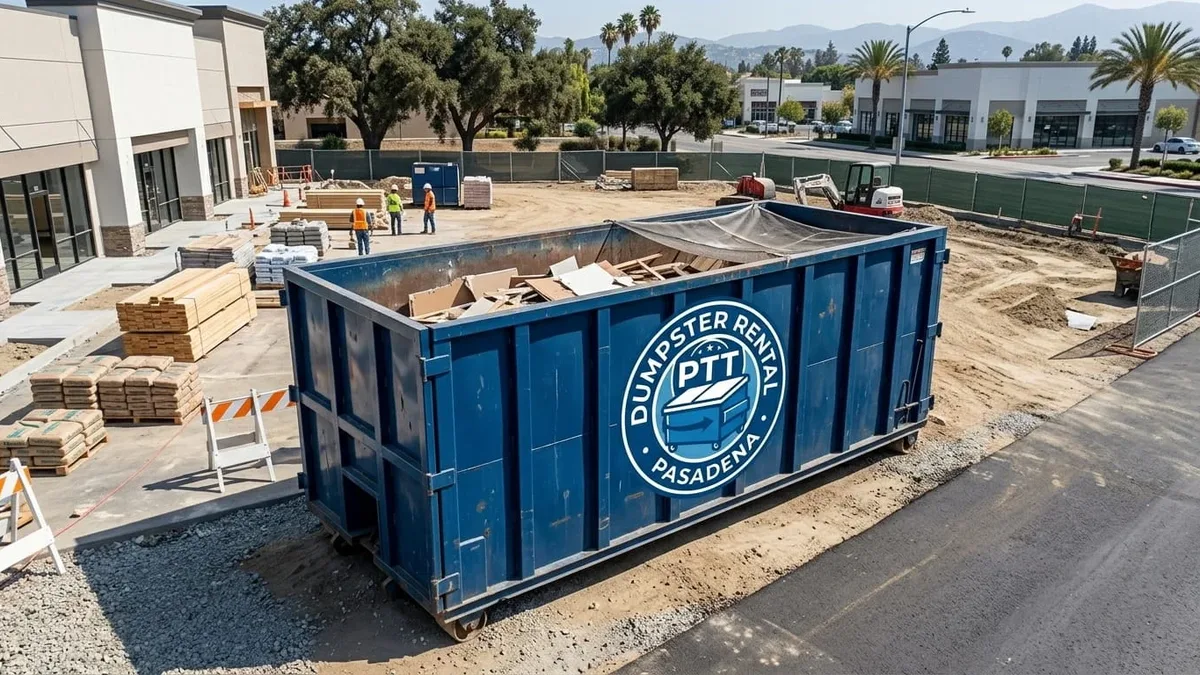
Roofing debris comes off the roof fast once the crew starts, so the container needs to be positioned somewhere it can absorb a steady stream of material without blocking access — usually as close to the base of a ladder or chute as the driveway allows. Most tear-offs place the dumpster on the driveway with no permit required, though tighter lots and hillside driveways common in foothill neighborhoods like Sierra Madre and La Cañada Flintridge sometimes need a bit more planning on exact placement. Our placement tips guide covers driveway sizing and surface protection if you want to plan that out ahead of delivery.
Permits for Roofing Debris in the Right-of-Way
Driveway placement never requires a permit anywhere in our service area. If a tear-off has to place the container on the street instead, Pasadena requires its own Storage Container Application through the city, while Altadena and other unincorporated pockets fall under LA County’s Drop Box Permit via EPIC-LA — neither publishes a flat fee, so call to confirm current cost. The other cities in our service area each run their own process. Our permit guide has the full breakdown by city.
Get Your Tear-Off Sized Correctly
Roofing is one of the easiest jobs to size wrong by guessing, and one of the easiest to size right with two numbers: squares and layers. Call PTT Dumpster Rental at (626) 740-2880 with those details — and whether the roof is shingle or tile — and we’ll quote a flat rate for the container that actually fits the weight of your tear-off. Our roofing dumpster rental page and full size guide are there if you’d like to compare options first.