Sizing gets most of the attention when people plan a dumpster rental, but placement is where a delivery actually succeeds or runs into trouble. Across our service area — Pasadena, Altadena, South Pasadena, San Marino, Sierra Madre, La Cañada Flintridge, Arcadia, Monrovia, Glendale, and Temple City — lot shapes, driveway grades, and local rules vary enough that a few minutes of planning ahead of delivery saves everyone a headache.
Private Driveway Placement: The Simple Default
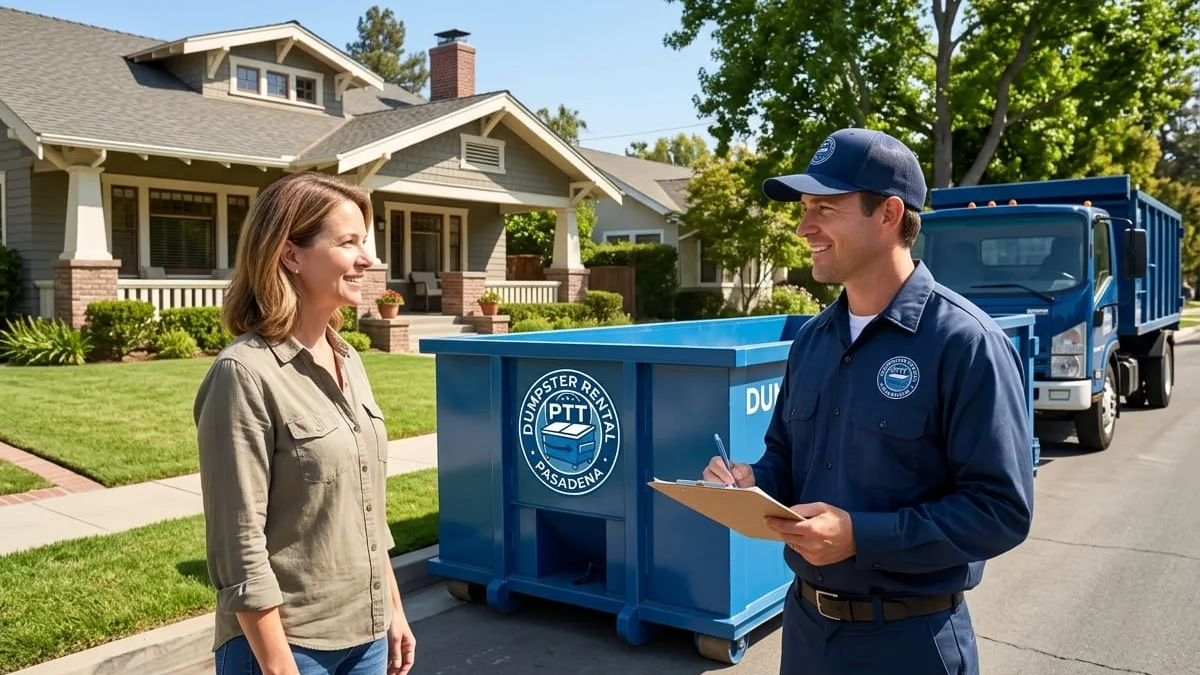
The large majority of our deliveries go straight onto a driveway, yard, or parking area, and placement on private property never requires a permit anywhere in our service area — that’s true in Pasadena, Altadena, and all nine surrounding towns we serve. It’s the simplest option by far, and it’s where we’d point almost every residential customer if the driveway can physically accommodate the size booked.
Measuring Before We Deliver: Width, Length, Overhead Clearance
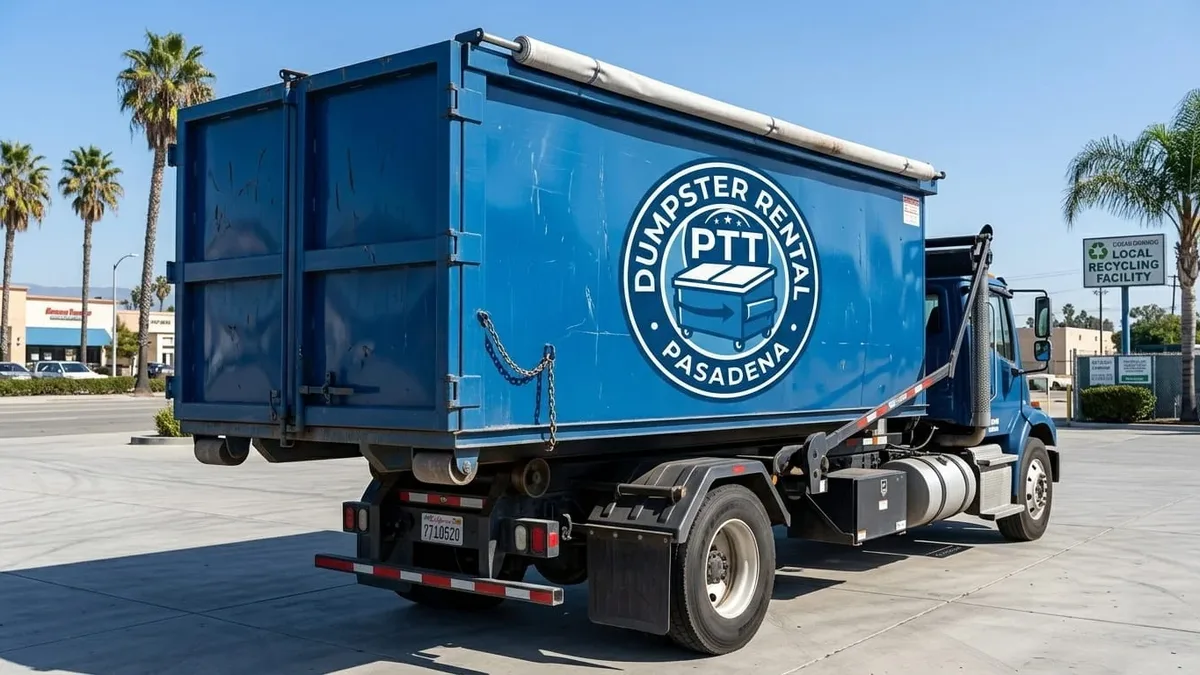
Our containers range from 14 feet long (10-yard) up to 22 feet long (20 through 40-yard), and all of them need roughly 8 feet of clear width to place safely, plus straight-line room for the delivery truck to back in and pull out. Overhead clearance matters just as much as ground space — tree branches, low utility lines, carport roofs, and garage overhangs can all block a delivery that would otherwise fit. Walk the path from the street to the intended spot and check for anything overhead before you book, and mention any tight spots when you call so we can confirm the size you want will actually clear.
Hillside and Foothill Driveways
A meaningful share of our service area sits right up against the San Gabriel Mountains foothills — parts of Sierra Madre, La Cañada Flintridge, and the northern reaches of Altadena in particular have steep, narrow, or curved driveways that need extra thought before a roll-off truck arrives. A steep driveway grade can affect where a container can safely sit level, and a narrow or winding approach may limit which size truck can maneuver in at all. If your property is on a hillside street, describe the driveway’s grade and width when you call — in some cases the safest placement ends up being a flatter section of the property, or the street, rather than forcing a container onto a slope it wasn’t built to sit level on.
Protecting the Surface: Boards and Placement Technique
A loaded roll-off container is heavy, and its steel rails can mark or crack an unprotected driveway surface, particularly asphalt in warm weather or older, thinner concrete. We place wooden boards under the container’s contact points as standard practice on paved driveways, which spreads the load and protects the surface underneath. If your driveway has known cracks, a decorative finish, or pavers, mention it up front so we can plan placement — and boards — accordingly rather than finding out on delivery day.
HOA and Deed-Restricted Communities
Some neighborhoods in our service area, San Marino in particular, carry HOA rules or deed restrictions that go beyond city permit requirements — limits on how long a container can sit visible from the street, or requirements about screening it from view. These are separate from, and in addition to, any city permit process, and they’re set by the community association rather than the city itself. If you live in an HOA or deed-restricted community, it’s worth checking your association’s rules before booking, even for driveway placement that wouldn’t otherwise need a city permit.
When the Street Is the Only Option: Permits by City
If a driveway genuinely can’t accommodate the container size needed, the container has to go in the street or public right-of-way instead, and that does require a permit. The City of Pasadena handles this through its own Storage Container Application via the city’s mypermits system. Altadena, being unincorporated, falls under LA County Public Works’ Drop Box (Roll-Off Bin) Permit, processed through EPIC-LA, and only LA-County-approved vendors can place bins in the county right-of-way. Neither publishes a flat fee online, so call to confirm the current cost. South Pasadena, San Marino, Sierra Madre, La Cañada Flintridge, Arcadia, Monrovia, Glendale, and Temple City each run their own separate process through their own city government — don’t assume any of them mirror Pasadena’s or the county’s rules. Our permit guide covers each city’s process in more detail.
Foothill Terrain and Seasonal Timing
The foothill communities in our service area sit in real wildland-urban-interface terrain, and wildfire and Santa Ana wind season, roughly September through December, is worth factoring into delivery planning for hillside properties — high wind days can affect scheduling flexibility, and access roads in some foothill neighborhoods can be affected by fire-weather closures. It’s a practical, not dramatic, consideration: if you’re planning a project on a hillside property during those months, build a little flexibility into your delivery window and mention your location when you call.
Plan Your Delivery
The right size dumpster still needs the right spot to sit, and a quick conversation about your driveway, grade, and any HOA rules ahead of time is the easiest way to make sure delivery day goes smoothly. Call PTT Dumpster Rental at (626) 740-2880 and describe your property — we’ll confirm placement, whether boards are needed, and whether a permit applies before the truck ever leaves the yard on Fair Oaks Ave. Our service area page has notes specific to each of the towns we cover.