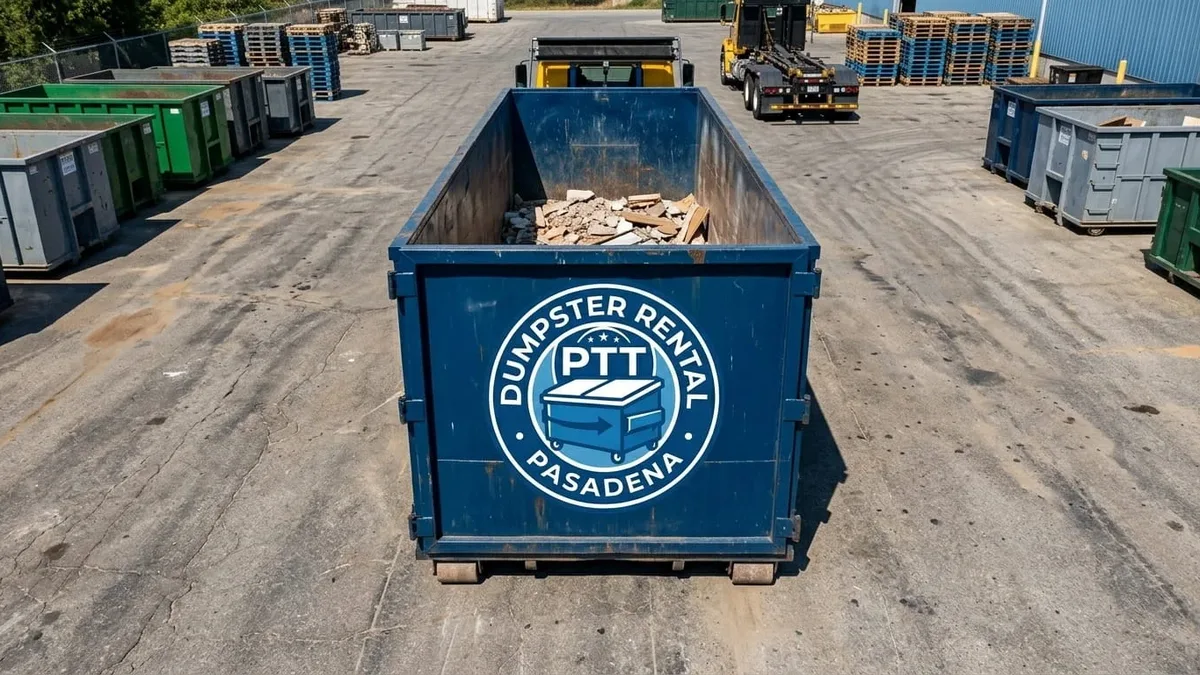
A residential clean-out dumpster gets filled once and hauled away. A jobsite dumpster is a different animal — it fills in waves over days or weeks, mixes light material with genuinely heavy loads, and if it’s sized or scheduled wrong, it becomes the thing slowing the crew down instead of the thing keeping the site clear. Contractors working around Pasadena, Altadena, and the rest of the San Gabriel Valley call our yard on Fair Oaks Ave for the same handful of jobs often enough that we can walk through the sizing and scheduling logic here in one place.
What Counts as Construction Debris
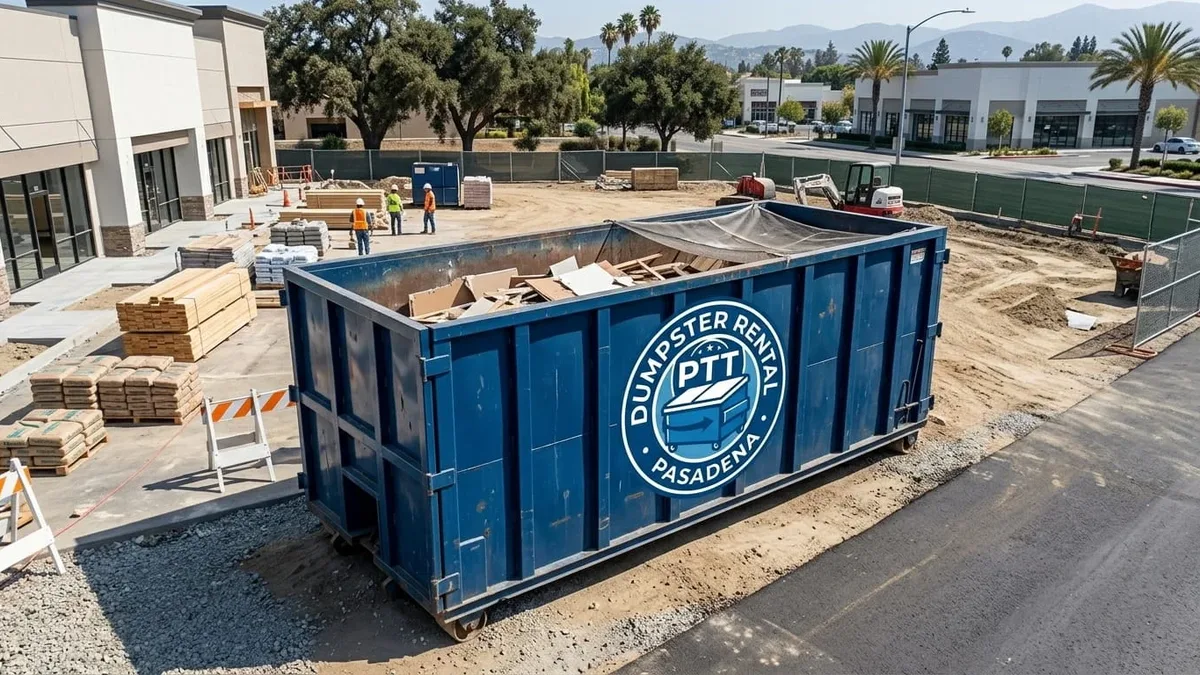
Framing offcuts, drywall scraps, old cabinetry, flooring being ripped out, packaging from new materials, broken tile, insulation, and general remodel waste all fall under construction debris. So does demolition material from a partial teardown — interior walls, a removed deck, an old patio slab — though a full structural demo or heavy concrete load is often better handled as its own category; see our demolition debris removal and concrete & heavy debris pages if that’s closer to what you’re generating. What doesn’t belong in a construction container: batteries, electronics, paint and solvents, fluorescent tubes, asbestos-containing material, and a few other California-regulated items covered below.
Sizing a Jobsite Container: 20, 30, or 40 Yard
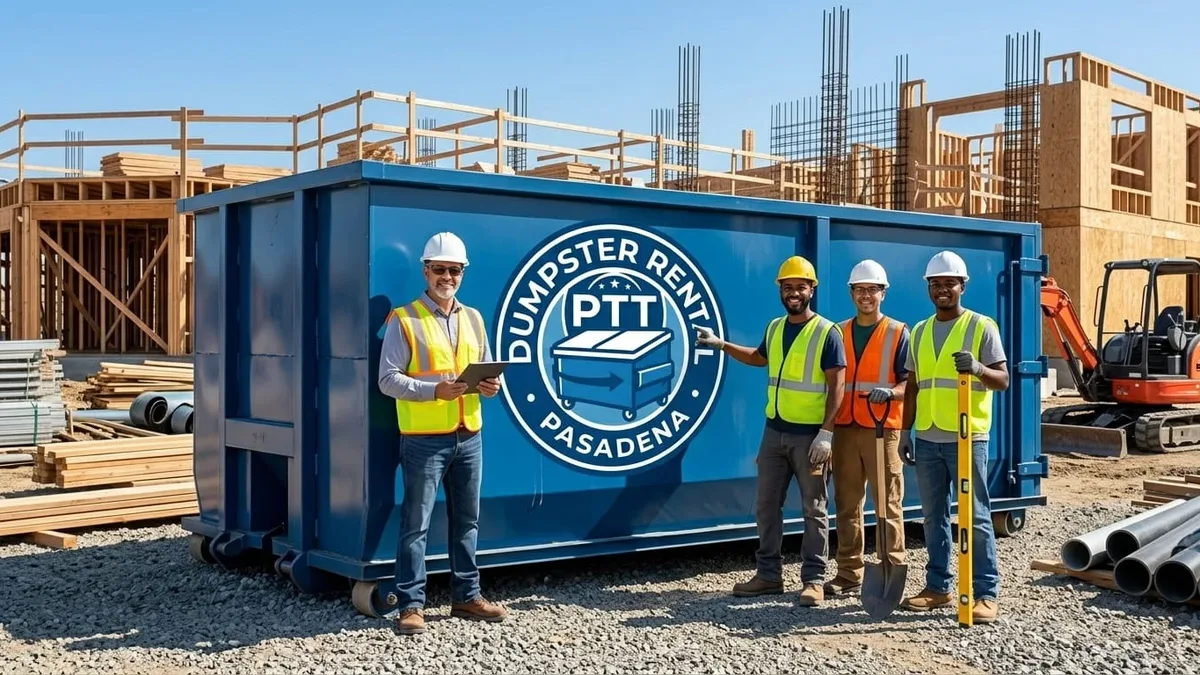
Most single-trade remodel work — a kitchen gut, a bathroom-plus-flooring job, a smaller addition — fits comfortably in a 20-yard dumpster, our most-booked size across every service we offer. Whole-house renovations, new-build framing waste, and commercial tenant improvements tend to outgrow that fast and are a better match for a 30-yard dumpster, which holds roughly nine pickup-truck loads without needing a mid-job swap. Major demolition and larger new-construction sites generating a steady volume of lighter material — lumber, drywall, packaging — are where a 40-yard dumpster earns its size. Our construction dumpster rental page has the full rundown, and if your schedule is loose enough to need a container same day, our same-day dumpster rental service covers calls made before noon.
Weight Is the Real Limit on Concrete and Drywall
Volume is only half the sizing question on a jobsite. Concrete, brick, tile, and full pallets of drywall are dense enough that they hit a container’s weight allowance long before it looks full, and a 40-yard box loaded with concrete debris will overshoot its weight limit faster than a 20-yard loaded with framing scrap ever would. If a job is generating a genuinely heavy load — a torn-out slab, a stack of tile, masonry debris — it’s worth routing that separately in a container sized for weight rather than volume, which is exactly what our concrete & heavy debris service is built for. Mixing a heavy load into a general construction box is the single most common way a jobsite dumpster ends up costing more than expected, so tell us up front what’s going in and we’ll size and quote it accordingly.
Scheduling Swap-Outs on a Multi-Week Job
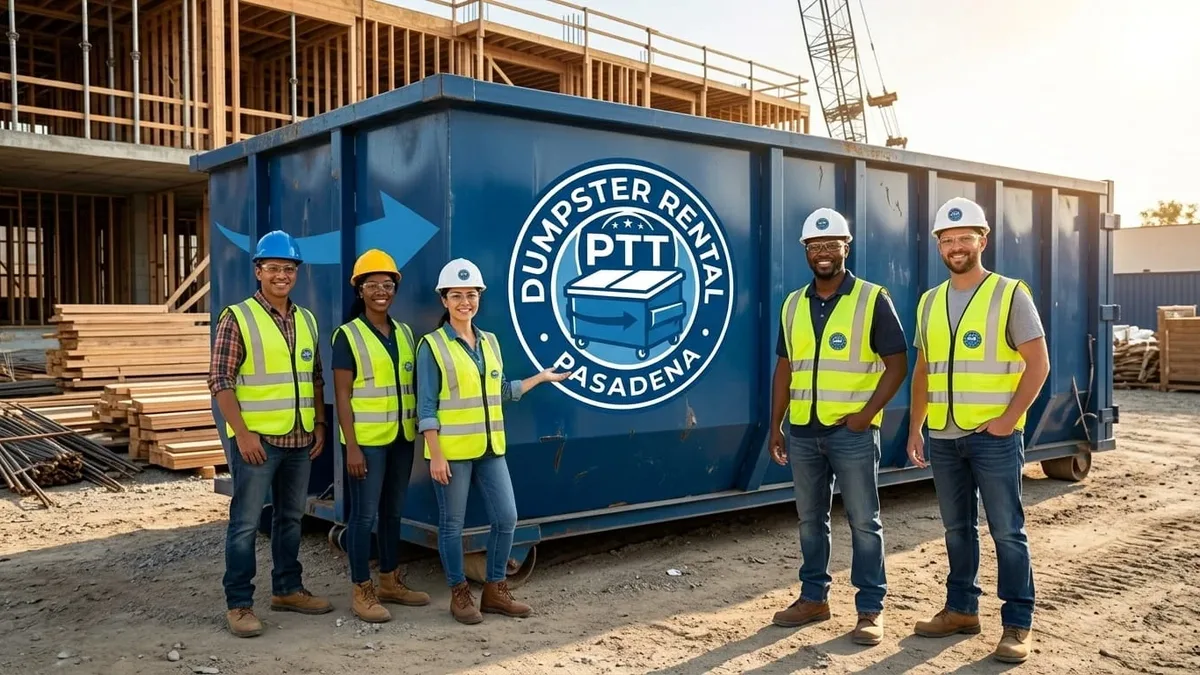
Once a job runs past a week or two, the question shifts from “what size” to “how often does it need to be emptied and brought back.” A framing crew generating steady volume might need a container swapped every few days; a finish-work phase producing lighter, slower debris might get three or four weeks out of the same box. Set a rough swap-out cadence with us when you book rather than calling reactively once the container’s already full — it keeps the site clear and avoids a work stoppage waiting on a truck. For jobs with predictable, recurring pickup needs, our commercial dumpster rental service is built around exactly this kind of scheduled, on-call arrangement.
Permits for a Container in the Right-of-Way
If the container sits entirely on private property — the driveway, a parking area, the lot itself — no permit is required anywhere in our service area, full stop. That covers the majority of jobsites. If the only option is the street or curb, the process depends on where the job is: the City of Pasadena requires a Storage Container Application through its Public Works department, processed via the city’s online mypermits system, while Altadena and any other unincorporated pocket of the county fall under LA County Public Works’ Drop Box (Roll-Off Bin) Permit, processed through EPIC-LA. Neither publishes a flat fee online, so call to confirm the current cost before you budget it. The other eight cities in our service area — South Pasadena, San Marino, Sierra Madre, La Cañada Flintridge, Arcadia, Monrovia, Glendale, and Temple City — each run their own permit process through their own city government, so don’t assume Pasadena’s or the county’s rules carry over. Our full Pasadena & Altadena permit guide walks through all of it in more detail.
What Still Can’t Go in a Construction Container
Even on a jobsite, a handful of items stay banned from a general debris box under California law: batteries of every type, electronics like monitors and old equipment, fluorescent tubes and LED fixtures, paint and solvents, and asbestos-containing material, which always requires a licensed abatement contractor regardless of container size. Waste tires and compressed gas cylinders like propane tanks also need to be routed separately. Our what can and can’t go in a dumpster guide covers the full list if your crew is working through demo on an older property where some of this material tends to turn up.
The Current Rebuild Phase in Altadena
Altadena is roughly twenty months into rebuilding after the Eaton Fire (January 2025), one of the most destructive wildfires in California history, and a growing share of our jobsite calls now come out of that rebuild — framing offcuts, packaging, and general construction waste from homes going up on cleared lots. We don’t handle fire or ash debris removal itself; that work involves hazardous material and is coordinated through official county and federal cleanup programs, not private dumpster companies. But once a lot has been cleared and a contractor is framing a new structure, that’s exactly the kind of new-construction debris a 30 or 40-yard container is built for, and it’s work we’re glad to support in the neighborhood our own yard sits in. See our rebuild-phase dumpster guide for sizing and permit specifics on a cleared-lot build.
Get a Quote for Your Jobsite
Every jobsite generates a different mix of light and heavy material, and the fastest way to get the right size and swap-out schedule is to describe the job on a call rather than guess from a chart. Call PTT Dumpster Rental at (626) 740-2880 and we’ll quote a flat rate for the container that fits your project, whether that’s a single 20-yard box or a scheduled rotation of 30s and 40s for the length of the build. Our full dumpster sizes page and services page cover the rest of the lineup if you want to compare options before you call.